For years, any man over 50 could ask his GP about having a simple blood test for signs of prostate cancer, known as a prostate-specific antigen (PSA) test – even without symptoms. Now, that is changing.
This summer, the Government rejected calls for widespread prostate cancer screening and instead announced a targeted programme for men aged 45 to 61 with a pathogenic BRCA2 gene variant and a family history of breast, ovarian, pancreatic or prostate cancer. For everyone else, whether a man is offered a PSA test will now be left to his GP’s clinical judgment.
Lord Cameron, the former prime minister, who was diagnosed with prostate cancer last year after requesting a PSA test, called the move a “backward step”. But others argue that widespread PSA testing can do more harm than good, leading to overdiagnosis and unnecessary treatment for cancers that may never have caused problems.
‘I asked for a PSA test twice – it saved my life both times’
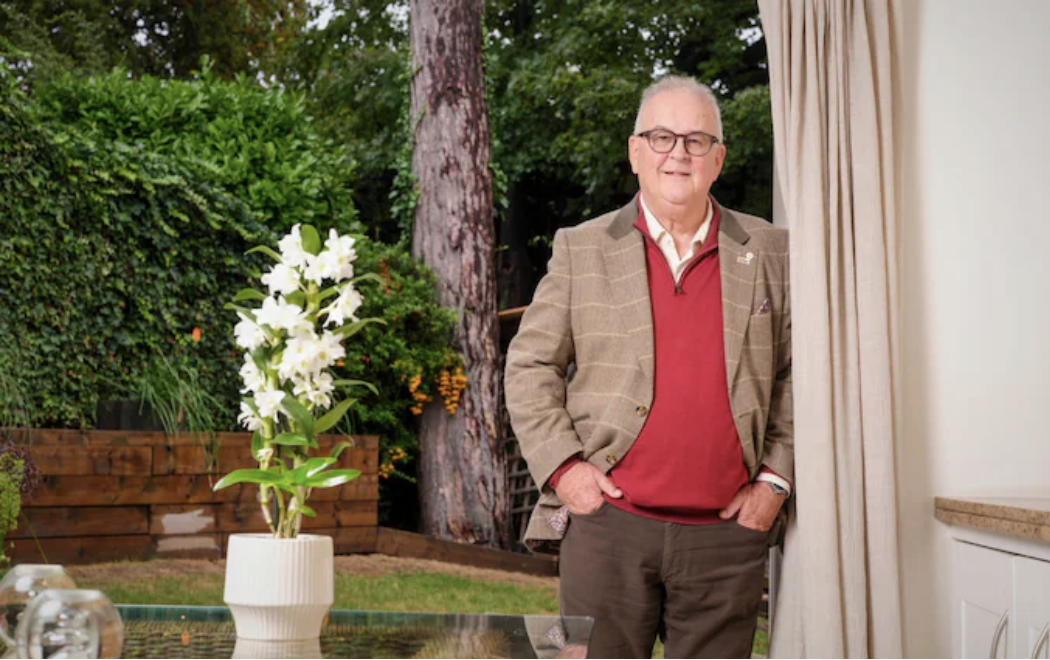
Martin Davies, 72
Prostate Project Chair

Davies is now in remission after nearly five years of gruelling treatment and complications Credit: Rii Schroer
I retired from working in finance in 2014, and enjoy spending my time with my wife, Julienne, family and friends, and volunteering for the Prostate Project. I first asked for a PSA test at my surgery in Guildford in 2013, when I was 59, after I started making more frequent trips to the bathroom at night. My PSA was around 4 ng/mL, which was slightly raised, but my GP wasn’t particularly concerned.
Eight years later, in 2021, I began experiencing increased urgency and frequency when urinating. In August, I requested another PSA test, which this time came back at 8 ng/mL. My GP referred me to the Stokes Centre for Urology at the Royal Surrey County Hospital, where an MRI discovered some lesions in the prostate. My urologist decided to biopsy them.
I was told I had prostate cancer on October 18 – my son’s 38th birthday – and, on November 21, I had a robotic prostatectomy. The operation itself went well, but the recovery was far from straightforward. I developed complications, followed by Covid, two blood disorders and kidney stones. By August 2022, I was at my wits’ end. All I wanted was to feel healthy again. Eventually, though, I felt like I was getting my life back. I was out and about more, and even began volunteering.
Then, in February 2025, a friend asked whether I was feeling all right because I looked “grey”. It raised alarm bells and prompted me to go back to the doctor for a PSA test. My PSA level had risen. A second test confirmed that it was still climbing, suggesting that some cancer cells had remained despite the prostatectomy. After everything I had been through, it was incredibly frustrating to hear.
I then had 20 days of radiotherapy, which was probably the hardest treatment I’d experienced. For several weeks, I was effectively camped out in the bathroom, as the side effects were awful, and barely slept. Thankfully, in May this year, I was told that I was in remission. Nearly five years after the diagnosis, it seemed right to open a bottle of champagne with Julienne – which we drank rather quickly.
I’m now chairman of the Prostate Project. After everything the NHS has done for me, I wanted to give something back. I’m not a clinician or scientist, but I do know that men should take their prostate health seriously and speak to their GP if they have concerns. I’ve also learnt that a prostate cancer diagnosis isn’t necessarily the end of the story. Even after surgery, PSA testing can remain important – and sometimes the journey is much longer than you expect.
‘I wish I’d had a PSA test sooner – surgery left me unable to urinate’
Darryl Chesters, 70
 Chesters says he was unprepared for the debilitating side effects of his prostate cancer treatment Credit: John Lawrence

I’m a former manufacturing representative, and my wife Kathy and I now enjoy a peaceful life in rural Gloucestershire. About two years ago, when I was 68, she suggested I have a PSA test. I had no symptoms, but as a former NHS nurse, she knew how common prostate cancer is among men my age. When I went to my GP in Cheltenham for the blood test, I was called back the next day and asked to come in straight away.
They carried out a biopsy, taking several samples from my prostate, which was painful and uncomfortable. Doctors confirmed I had cancer, but they had caught it relatively early. I was told some of the cancer was relatively aggressive, while other parts were slower growing, so the doctors decided to proceed with a prostatectomy, which is an operation to remove the prostate gland.
The operation took place two weeks later. While it was a success, the aftermath has been difficult. Almost two years on, I’m still incontinent. I also developed scar tissue that blocked my urethra, making it difficult to urinate and even causing a hernia. Eventually, I had to learn to self-catheterise – by inserting a thin tube into the bladder to drain urine – which I now do every few days.
Since the operation, I haven’t had an erection – let alone an orgasm. I don’t think I fully understood all the possible consequences of the treatment beforehand. In hindsight, having since read about focal treatments for prostate cancer, I wish I’d asked whether they were an option for me. I would even have paid for them privately.
I now have a PSA test every three months, and my results are undetectable, which is a relief. But I’ve had to push to keep getting them. On one occasion, my GP told me I looked healthy and questioned whether I really needed another test. After everything I’d been through, I could barely believe it.
In my opinion, all men more than 50 should be screened. I have two sons, one of whom is 48 and mixed race. I’ve told him to speak to his doctor about getting checked, particularly because prostate cancer is more common in black men. The past two years have been an eye-opener, and I’m so glad Kathy encouraged me to get checked.
‘My PSA test found incurable cancer – it was a massive shock’
Grant Aldred, 58
Aldred is campaigning for greater awareness of family history after discovering that his father was diagnosed at the same age Credit: Asadour Guzelian

In 2022, after taking early retirement, my husband, Patrick, and I moved to Scarborough. Two years later, aged 56, in March 2024, I went for a routine “well man” check-up at my local GP. I had no symptoms, but I’d been hearing more about prostate cancer in the news – something my father had suffered from. When I asked about a PSA test, my GP said I might “unnecessarily worry myself”, warning that the tests can be unreliable. But I decided to go ahead.
A week later, my GP called to say my PSA was “a little bit high”. At the diagnostic centre, further tests revealed that I had prostate cancer, which had already spread to my lymph nodes. My PSA was 111 ng/mL – rather more than “a little bit high”. I was told the cancer was incurable but treatable. It came as a significant shock.
Strangely, this was the first time I was asked about my family history. My father, as I later found out, had been diagnosed at 56 too. It frustrates me that no one had asked about this risk factor at my first “well man” check at 50, which would have allowed me to have a PSA test years sooner.
I began chemotherapy in June, with six rounds more than 18 weeks, followed by 20 rounds of radiotherapy to my prostate and lymph nodes. I finished treatment just before Christmas that year and remain on hormone therapy to keep the cancer under control. The side effects have been unpleasant, including a complete loss of libido, muscle aches, hot flushes and night sweats. At times, it’s been difficult to stay positive.
Thankfully, my PSA is now undetectable, at less than 0.02 ng/mL. My doctors are confident the cancer is under control for now. In the meantime, I’m making the most of life, but that doesn’t make the uncertainty any easier. My PSA is checked every three months, and before each test I feel terrified.
But I’m incredibly glad I asked for that first test, and it’s why I’m concerned about the changes to PSA testing – particularly for my two nephews. I don’t want them to slip through the gaps as I did. I understand why you can’t test every man indiscriminately, but I think family history should be taken more seriously.
I’m now a patient representative for the Cancer Alliance and work with Prostate Cancer UK and Prostate Progress to raise awareness. I’ll do anything I can to stop another man going through what I have